
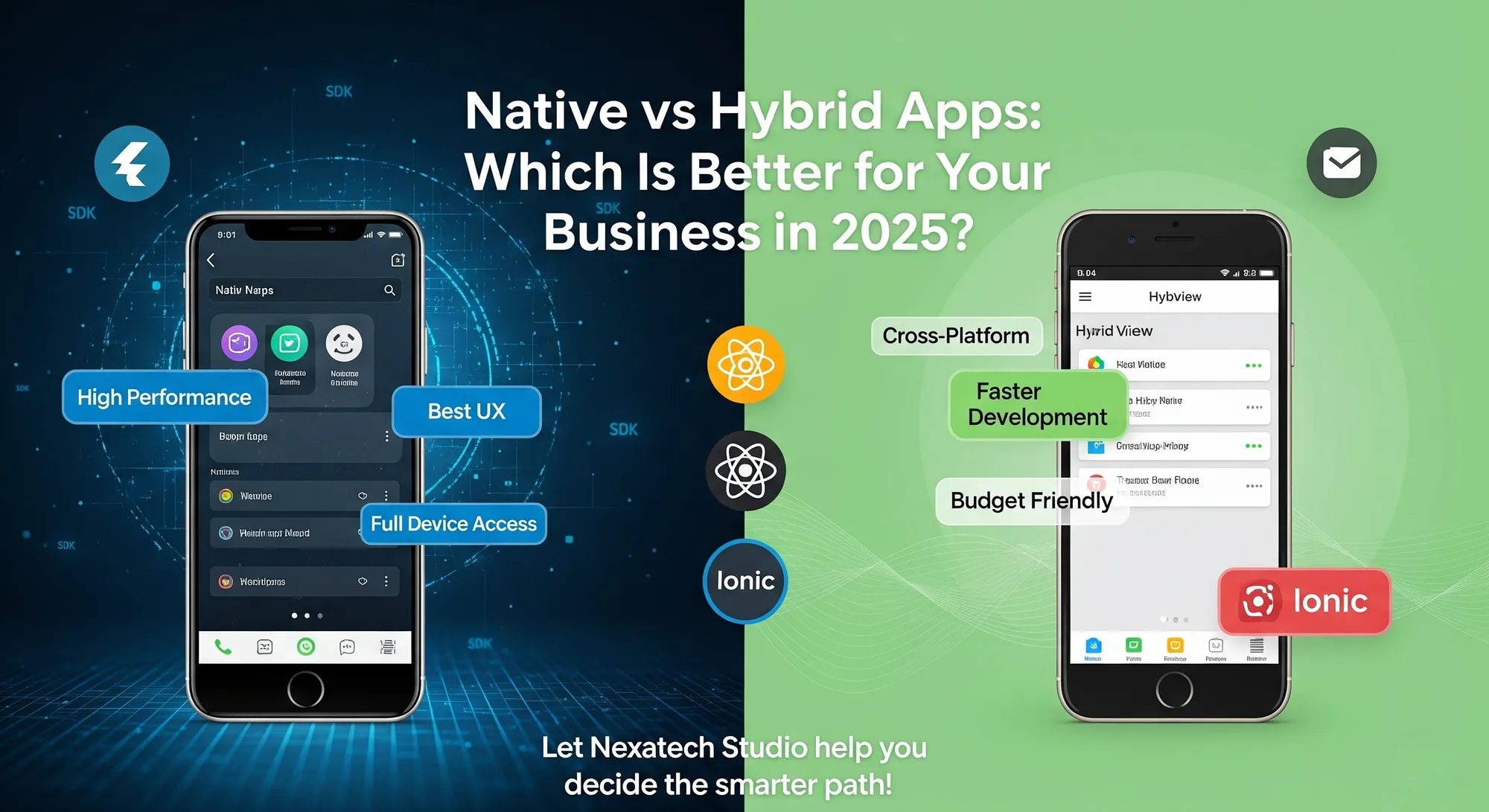
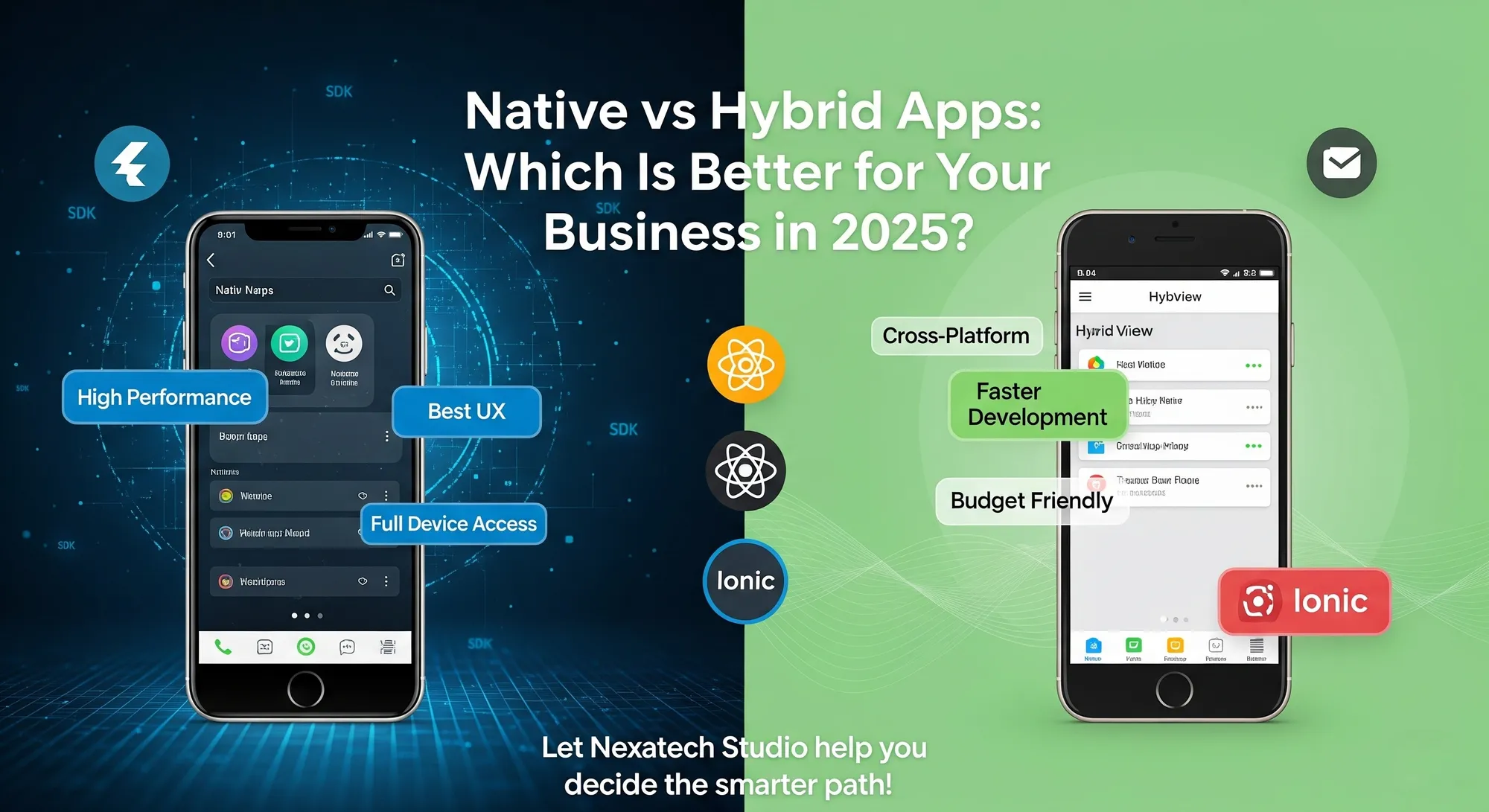
In the fast-paced digital landscape of 2026, choosing the right architecture for your mobile application is a critical business decision. The debate between Native vs Hybrid Mobile Apps is no longer about which technology is "better," but rather which one aligns with your specific budget, timeline, and user experience goals.
The Performance Comparison: Native vs Hybrid Mobile Apps
Understanding the technical nuances of Native vs Hybrid Mobile Apps is the first step toward a successful product launch. Both have their strengths, depending on your business requirements.
1. Performance and User Experience
Native apps are built specifically for one platform (iOS or Android). This allows them to utilize the device's hardware at maximum efficiency. In the Native vs Hybrid Mobile Apps comparison, Native remains the winner for apps requiring high-end graphics, complex animations, or heavy background processing.
2. Time-to-Market and Development Cost
Hybrid apps use a single codebase (using frameworks like Flutter or React Native) to run on both iOS and Android. If your business needs to reach the market quickly with a limited budget, Hybrid development is often the most cost-effective solution.
What is a Native Mobile App?
Native apps are built specifically for one platform iOS (using Swift/Objective-C) or Android (using Kotlin/Java). They are installed directly on the device and can fully access device hardware, sensors, and system APIs.
Pros:
- High performance and responsiveness
- Better integration with device features (camera, GPS, etc.)
- Superior UI/UX aligned with platform guidelines
Cons:
- Higher development cost (separate codebase for iOS & Android)
- Longer time to market if building for both platforms
What is a Hybrid Mobile App?
Hybrid apps are developed using web technologies (HTML, CSS, JavaScript) and run inside a native container. Frameworks like Flutter, React Native, and Ionic allow one codebase to be deployed across platforms.
Pros:
- Faster development and lower cost
- Single codebase for both Android and iOS
- Easier updates and maintenance
Cons:
- Slightly lower performance compared to native
- Limited access to advanced native features
- UI/UX may not feel perfectly native
Why CODE.ID is Your Trusted Development Partner
Deciding between Native vs Hybrid Mobile Apps requires deep technical insight. As a certified Tencent Partner in Indonesia, CODE.ID provides strategic consultancy to ensure your investment delivers the best ROI.
- Technology Agnostic Approach: We don't push one stack. We analyze your user base and feature list to recommend whether Native vs Hybrid Mobile Apps will serve you better in the long run.
- Tencent Cloud Integration: Leveraging our partnership, we provide secure and scalable backend infrastructures for both Native and Hybrid applications.
- Local Expertise, Global Standards: Our Jakarta-based engineering team ensures your app complies with local regulations (UU PDP) while maintaining world-class performance.
If your application requires complex device integrations or superior speed, Native is the ideal choice. However, if you are building an e-commerce platform or a corporate tool that needs to be deployed rapidly across all devices, Hybrid is your best bet.
Still undecided? Consult with CODE.ID's experts today to find the perfect mobile strategy for your enterprise.
📞 Contact us today: 0813-9971-0111
🌐 Learn more: https://www.code.id